

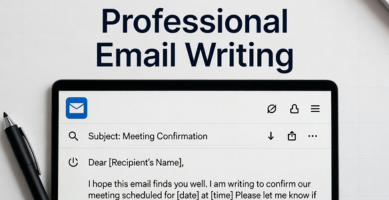
Professional Email Writing
This practical beginner course teaches students and recent graduates how to write clear, polite, and effective professional emails for the workplace. You will learn essential email etiquette, structure, tone, common phrases, and best practices to communicate confidently with colleagues, bosses, and clients.
-
4 Lessons

-
Beginner

-
2 hours 7 minutes

- Format Flexible learning
- Category Job readiness


This practical beginner course teaches students and recent graduates how to write clear, polite, and effective professional emails for the workplace. You will learn essential email etiquette, structure, tone, common phrases, and best practices to communicate confidently with colleagues, bosses, and clients.
- Professional Email Structure – Writing clear subject lines, greetings, and closings.
- Clear and Concise Writing – Keeping emails short, focused, and easy to read.
- Polite and Professional Tone – Using appropriate language and sentence starters.
- Email Etiquette & Common Mistakes – Avoiding errors and ensuring productive communication.
- Structure professional emails properly (subject line, greeting, body, closing).
- Write clear, concise, and polite emails using appropriate tone.
- Use professional phrases and sentence starters effectively.
- Review and edit emails to ensure they are productive and error-free.
- 4 structured video lessons with clear explanations and practical examples.
- Quizzes after each lesson to test and reinforce understanding.
- Official SkillUp Certificate of Completion upon finishing all lessons and quizzes.
Lessons
-
-
-
Understanding Professional Email Structure and Etiquette2 Sections 25 minutes
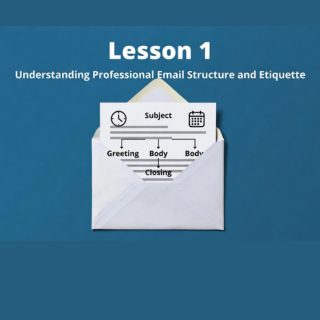
A professional email follows a clear structure: a specific subject line, appropriate greeting, well-organized body, and polite closing. Good etiquette includes being courteous, using proper formatting, and considering the recipient’s time. Always proofread before sending. This foundation helps you create emails that are respectful and effective in any workplace.
1 reading 1 assignment -
Writing Clear and Concise Emails2 Sections 33 minutes
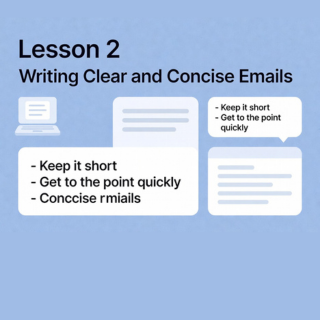
Clear emails get better results. Use short sentences, one main idea per paragraph, simple words, and avoid unnecessary details. Plan your purpose before writing. Keep the email focused so the reader can quickly understand what you need or what you are sharing.
1 reading 1 assignment -
Using Professional Tone, Phrases, and Sentence Starters2 Sections 34 minutes
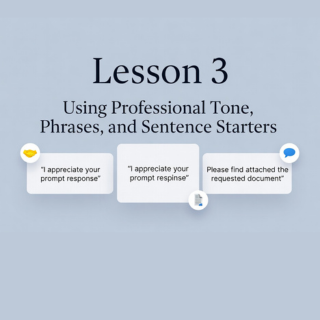
The professional tone is polite, confident, and respectful. Use ready-made sentence starters and phrases such as “As discussed…”, “I am writing to…”, “Thank you for…”, “Please let me know…”, and “I look forward to…”. These help you sound natural and professional without overthinking every sentence.
1 reading 1 assignment -
Common Email Mistakes and How to Review Your Emails4 Sections 35 minutes
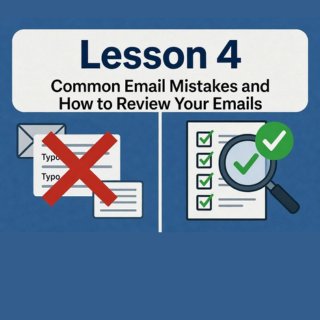
Common mistakes include unclear subject lines, overly long emails, wrong tone, spelling/grammar errors, and missing clear calls to action. Always review your email: check clarity, politeness, and purpose. Read it aloud or from the recipient’s perspective before sending.
2 readings 2 assignments
-


